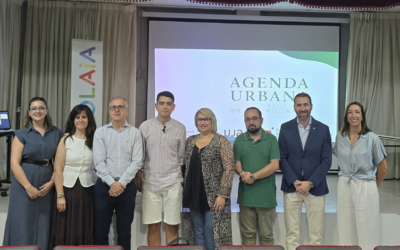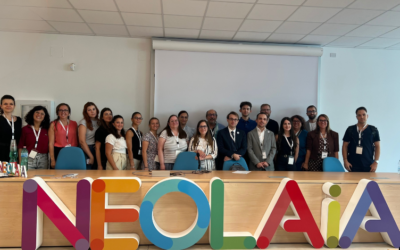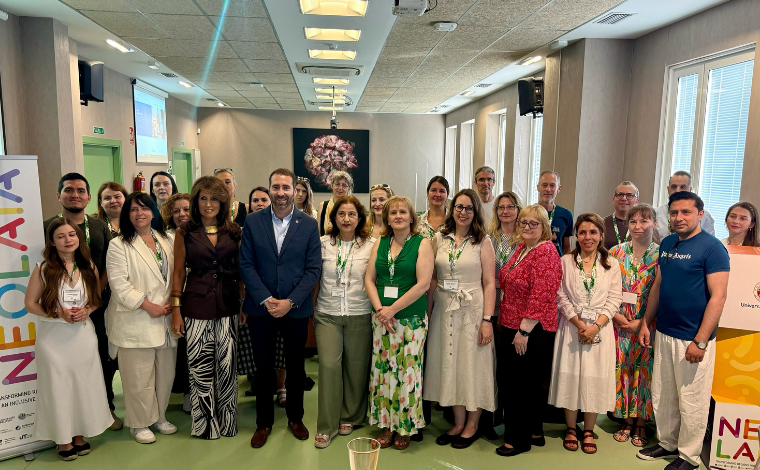
Teaching through English requires much more than language proficiency. It calls for inclusive teaching practices, thoughtful course design and the ability to engage students from diverse linguistic and cultural backgrounds. These themes were at the heart of the Common Accreditation Certificate for Plurilingual Education (CoACe): Empowering Academics to Teach through English as a Medium of Instruction (EMI), a Blended Intensive Programme hosted by the University of Jaén within the NEOLAiA European University Alliance on 15-19 of June, 2026.
The programme brought together academics from NEOLAiA partner universities for an international learning experience designed to strengthen teaching in multilingual higher education. Combining online learning with an intensive on-site week in Jaén, the initiative encouraged participants to reflect on their own teaching practice while exploring innovative approaches that support increasingly international classrooms.
Throughout the programme, participants examined how language, culture and pedagogy intersect in higher education. Rather than treating English simply as a teaching language, the discussions emphasised how multilingual learning environments can enrich students’ academic experiences when supported by appropriate teaching strategies.
Interactive workshops explored practical ways of designing learning activities that encourage active participation, collaboration and critical thinking. Participants exchanged experiences from their own institutions, comparing different educational cultures and considering how successful practices could be adapted across disciplines and national contexts. The collaborative nature of the programme highlighted one of NEOLAiA’s greatest strengths: the opportunity to learn from colleagues with diverse perspectives while working towards shared educational goals.
Technology also played an important role throughout the week. Participants explored digital tools that support collaborative learning and discussed ways of integrating innovative teaching methods into everyday classroom practice. By experimenting with different approaches to lesson planning and student engagement, they developed ideas that can be readily transferred to their own courses.
Another important component focused on effective communication in English-Medium Instruction. Sessions addressed strategies for making classroom communication clearer, more accessible and more engaging for international student groups. From developing confident classroom delivery to improving interaction with students, participants gained practical techniques that support both teaching effectiveness and student understanding.
The programme concluded with a strong emphasis on assessment, encouraging participants to consider how evaluation methods can align with both learning outcomes and the realities of multilingual classrooms. Through collaborative activities and peer discussion, academics explored assessment approaches that recognise diverse linguistic backgrounds while maintaining academic quality and fairness.
Beyond the academic programme, the week also provided valuable opportunities for networking and intercultural exchange. Bringing together lecturers from across the Alliance fostered new professional connections and strengthened collaboration between institutions committed to advancing multilingual and inclusive higher education.
Upon completing the programme, participants were awarded the Common Accreditation Certificate for Plurilingual Education (CoACe), recognising their professional development in English-Medium Instruction and plurilingual pedagogy.
As NEOLAiA continues to invest in staff development, initiatives such as CoACe contribute to building a stronger European learning community – one in which academics are equipped with the knowledge, confidence and practical tools to create engaging learning experiences for increasingly diverse student populations.