
LIVING LAB PROGRAMME
With the Living Lab Programme, NEOLAiA is truly committed to transforming regions for an inclusive Europe!
The programme’s aim is to support research collaborations, foster a culture of regional cooperation, and, by engaging regional stakeholders and citizens, ensure that its research addresses real-world challenges and develops solutions that directly benefit the NEOLAiA regions!
What is a living lab?
For NEOLAiA’s partners, Living Labs are open innovation ecosystems that integrate research and real-world experimentation in collaboration with multiple stakeholders, such as universities, businesses, governments, and citizens.
How to implement this programme?
Through our NEOLAiA Living Lab Hub! This hub brings together representatives from each NEOLAiA university, as well as experts in Living Labs, collaborative research platforms, regional stakeholders, and citizen engagement in research. It is our organising tool, used to identify potential collaborations and share best practices. It also serves as a point of contact for project leaders seeking support from the alliance as a whole !
Activities to share best practices, develop new projects and transform our regions
Workshops
Seminars
“Speed-dating” sessions
Other activities
Living labs and collaborative platform within the Alliance
The NEOLAiA alliance is fortunate to have Living Labs and collaborative platforms among its members. Diverse in their themes, organization, and methods, these structures are a valuable asset, underlining the richness of the Alliance’s innovation ecosystem! Discover them!
Bielefeld University
Cor-Lab
Bielefeld University
University of Tours
Use Tech Lab
University of Tours
Örebro University
Social Impact Lab
Örebro University
University of Salerno

University of Ostrava

Activities and Tools
Discover the next activities of our Living Lab Hub and the Living Labs within our Alliance!
Workshop “Regional stakeholders and LL, how to collaborate?”
Date: on 5th March 2026
Organizer: NEOLAiA Living Lab Hub
Workshop “Pool existing protocols and transpose project’s results”
Date: on 15th June 2026
Organizer: NEOLAiA Living Lab Hub
Use Tech Lab conference
Date: 28th May 2026
Organizer “Use Tech Lab”
lOOKING FOR A PARTNER?
You are a researcher, being part of one of the NEOLAiA’s universities ?
Find your partner, project and your contact by using the NEOLAiA tools at your disposal!
You are not part of one of the NEOLAiA’s universities?
You are a regional stakeholders, citizen of researchers, please fill in the dedicated form here, expressing your needs
Form coming soon
Greenopoli
University: Università degli Studi di Salerno, Italy
Key words: environmental awareness, sustainability, social involvement, water, sustainable development goals
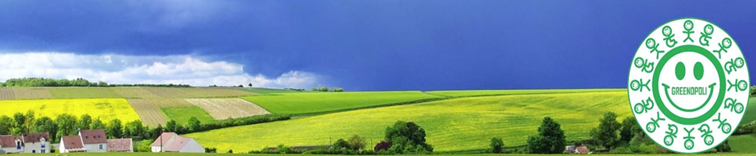
Greenopoli is a website (www.greenopoli.it), a Facebook page, an idea, an environmental education project and a teaching method created by Prof. Giovanni De Feo of the University of Salerno (Department of Industrial Engineering). This project fosters a new environmental awareness in children, young students and adults. Complex concepts were made simple through dissemination, using an innovative method of communication to convey results and indicators that became easy to understand thanks to the research activity of the Department on Life Cycle Assessment. The project was developed mainly in the Campania region, but involved also other Italian provinces.
The project was developed mainly in the Campania region, but involved also other Italian provinces (Aosta, Asti, Bari, Catania, Como, Cosenza, Enna, Foggia, Genoa, Latina, Lecce, Padua, Palermo, Ragusa, Savona, Sondrio, Terni, Turin, Varese, and Vicenza)
Coordinator: Prof. Giovanni De Feo https://docenti.unisa.it/004338/home
More information: https://www.greenopoli.it/home/
Lerco
Molecular biology a genomics
Key words: New viruses, Leishmaniases, Targeted genetic manipulations, Comparative genomic analyses
- Identification and characterisation of new or poorly studied viruses
- Identification and characterization of virulence factors of leishmaniases
- Comprehensive research on protist endosymbionts
- Stablishing the possibility of targeted genetic manipulations in selected protist models
- Characterization of unusual functional complexes and pathways of endosymbiotic organelles
- Genomic characterization of new organismal lineages
- Comparative genomic analyses of novel genes
- New study and academic programmes
More information: https://lerco.osu.eu/29455/molecular-biology-a-genomics/
Biochemical and biophysical methods of living systems analysis
Key words: Highly Specific Adsorption of Biomolecules, Nanoparticles, Biologically Significant Macromolecules, Membrane systems, Oxidative stress in biological systems
Part 1 – Biochemistry
- Materials for Highly Specific Adsorption of Biomolecules
- Analytical Use of Nanoparticles for Studying Biologically Significant Macromolecules in Aqueous Environments
- Preparation of Selective Adsorbents for Biomolecules and Their Use for Immobilization, Isolation, Quantification, and Detection of Biomedically Significant Markers from Body Fluids and Tissues
Part 2 – Biophysics
- Structural-functional characteristics of membrane systems and macromolecules
- New methodical approaches for assessment of oxidative stress in biological systems
More information: https://lerco.osu.eu/29454/biochemical-and-biophysical-methods/
Nanostructure physics – Modeling and simulation
Key words: Highly Specific Adsorption of Biomolecules, Nanoparticles, Biologically Significant Macromolecules, Membrane systems, Oxidative stress in biological systems
Computational methods are applied to molecules, clusters, solids, surfaces, and nanomaterials, with a focus on predicting their structural, electronic, optical, adsorption properties, and their interactions. Complex systems and phenomena such as transition metals, their oxides, non-covalent interactions, physisorption, nuclear delocalization effects in strongly quantum systems, or excitonic effects in nanostructures are successfully described.
Development of selected computational methods, study of interactions, and molecular modeling (computational molecular physics – molecular simulations using force fields. Productive and computationally demanding calculations (e.g., quantum Monte Carlo) are performed
More information: https://lerco.osu.eu/29453/modeling-and-simulation/ /
Physical activity and health
Key words: Highly Specific Adsorption of Biomolecules, Nanoparticles, Biologically Significant Macromolecules, Membrane systems, Oxidative stress in biological systems
This lab establishes a cohort study on the links between physical activity, health, and Health and Technology. The cross-sectional nature, which suggests the potential of physical activity to achieve health benefits for the population in the region, may reveal causal links that will lead new findings and strategic consequences for distinct public policies. The project findings should result in the specification of interventions and further intervention studies aiming at verifying the functioning of active lifestyle support clinics in the population, and output recommendations of preventive examinations by general practitioners. Furthermore, the lab investigates connections between life quality and wellbeing on the one side, and digital technologies on the other side. The influence of such technologies and also eHealth and mHealth to physical, social and psychological wellbeing is emphasized.
More information: https://lerco.osu.eu/29452/4haie-pa-and-health/ and https://www.digiwell-opjak.cz/en/home/
Neurology and neurorehabilitation using artificial intelligence
Key words: Artificial Intelligence in Neurology; Neurorehabilitation; Virtual and Augmented Reality; Robotic-Assisted Therapy; Telemedicine and Neurosurgery
The research project Neurology and neurorehabilitation using Artificial Intelligence at the University of Ostrava focuses on the integration of AI algorithms and tools in neurological diagnosis and treatments, for example, to enhance stroke diagnosis, therapy, and predictability. As an essential part, the neurorehabilitation with artificial intelligence and virtual reality, and augmented reality is also considered. For instance, robotic-assisted rehabilitation, developing humanoid robots for telemedicine, hardware and software tools for VR-based neurorehabilitation, surgical simulations, and VR/AR applications in neurosurgery.
More information: https://lerco.osu.eu/29451/neurorehabilitation-using-artificial-intelligence/
Refresh
Governance for Sustainable Transition
Key words: : Governance, Socio-technological transition, Sustainable transition, Socio-demographic challenges, Economic diversification, Green just path development
The region has long faced low entrepreneurial activity and a low representation of dynamic economic sectors such as KIBS or Hi-tech industries. At the same time, it faces socio-demographic challenges such as social exclusion and population out-migration. A just transition appears to be a unique opportunity to alleviate these problems, but it requires a comprehensive socio-technological approach, involving not only technological transformation but also institutional, organisational and socio-cultural change. This approach, focusing on socio-technological transition (STT), seeks transformation along different dimensions
More information: https://www.osu.eu/refresh-test-2025/research-programme-1-governance-for-sustainable-transition/
Predicting trends in undesirable social phenomena
Key words: Vulnerable groups, Energy transition, Social work
This research programme focuses on analysing, modelling and forecasting the impact of the introduction of modern energy technologies and innovations on vulnerable groups in the Moravian-Silesian region. It focuses on groups identified in the field of social work as: (1) children and families at risk; (2) the elderly; (3) people in residential social care facilities; (4) people at risk of or affected by crime. The programme is based on the assumption that the success and sustainability of the energy transition depend on the ability to prevent or at least mitigate its negative consequences for the most vulnerable parts of the population in the Moravian-Silesian Region. The research outputs aim to provide expert recommendations to ensure the legitimacy, effectiveness, and sustainability of the energy transition and minimize its negative impacts.
More information: https://www.osu.eu/refresh-test-2025/research-programme-2-predicting-trends-in-undesirable-social-phenomena/
Historical Risk Analysis of Social Transformations
Key words: Social transition and transformation, Historical perspectives, Historical changes
The interdisciplinary team will focus on the study of the relationship between the evolution of energy resources and technologies and the transformation of social structures over a long period of time, from the medieval era transitioning to modern society, through the period of industrialisation and the subsequent transition to a post-industrial economy. This research will include a global-historical capture of changes in working patterns and relationships, as well as a reflection on the transformation of technologies in transport infrastructure and their impact on social and cultural aspects and changes in individual position within society.
More information: https://www.osu.eu/refresh-test-2025/research-programme-3-historical-risk-analysis-of-social-transformations/
Analysis of the impact of transformation on education, human health and mental health
Key words: Educational transition, Cohort studies, educational trajectories and employment opportunities, biopsychosocial characteristics of workers, career transition
The research team focuses on comprehensive research on the region’s educational transformation. Two cohort studies will examine how the socioeconomic situation of individuals and their families affects their educational and career needs in the context of the specific Moravian-Silesian region. Specifically, these studies will focus on: (1) analyzing the resilience of students and families to changes in education and in the context of new technologies; (2) examining the impact of mining downturns on educational trajectories and employment opportunities in the region; and (3) identifying the biopsychosocial characteristics of workers during their career transition and their impact on the educational and social inclusion needs of children.
More information: https://www.osu.eu/refresh-test-2025/research-programme-4-analysis-of-the-impact-of-transformation-on-education-human-health-and-mental-health/
Steneo
Social Dimension of New Energy Technologies
Key words: Energy transition, Social innovation, Living lab, Positive Energy District
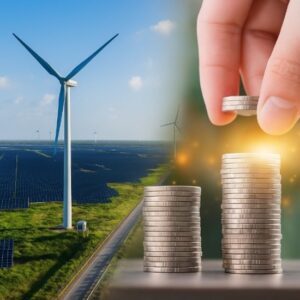
The energy transition, motivated by the urgent need to address the causes of climate change, represents a key challenge. Despite the urgency of the response, it is necessary to pay attention to social aspects in addition to the technological ones. Otherwise, high social costs may arise. The aim is to propose social innovations—using living labs—for the creation of Positive Energy Districts.
Regional stakeholders involved: CTP (European real-estate developer), Ministry for Regional Development of the Czech Republic (national government body), Platforma pro sociální bydlení (national NGO for social housing), MSID (regional development agency), MEC (regional public energy agency), MSIC (regional innovation agency), City of Ostrava (local government), NEXT – STUDIO (local architectural studio).
More information: https://steneo.cz/en/home-english /
Artificial and Computational Intelligence
Key words: Artificial Intelligence, Neural networks, Fuzzy logic, Data mining and data analysis, Computer vision
“What is it about”: The lab conducts advanced theoretical and applied research in artificial and computational intelligence — developing theories, models and software solutions for decision-making, signal processing and computer vision under vague or imprecise conditions. Its application domains vary from the automotive industry or industry in general, medical diagnosis, general data analysis tools even to social system support models.
Regional stakeholders involved: MSID (regional development agency); MSIC (regional innovation agency); City of Ostrava (local government), Ministry of Justice; Ministry of Social Affairs; Industrial companies (worldwide); Medical imaging and diagnostic system providers (worldwide);
More information: https://ifm.osu.eu/