Course explored how data analytics can support inclusion and diversity across Europe
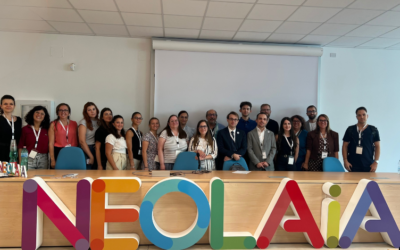
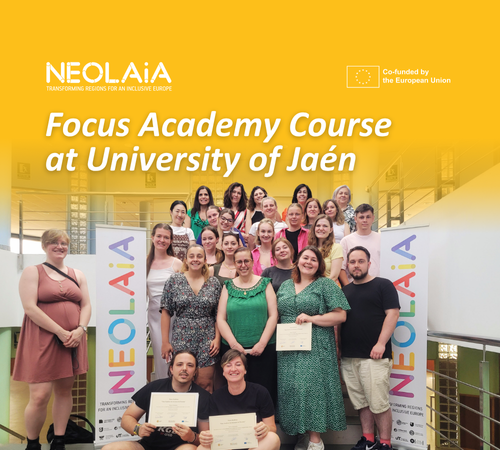
Students from six NEOLAiA partner universities recently completed the Focus Academy course, hosted by the University of Jaén (UJA) and led by its Vice-Rectorate for Internationalisation. The course, titled Data Analytics for Inclusion & Diversity, was coordinated by the Department of Statistics and Operations Research at UJA and concluded with a ceremony led by Beatriz Valverde.
Participants came from Bielefeld University (Germany), University of Ostrava (Czechia), Šiauliai State University of Applied Sciences (Lithuania), Örebro University (Sweden), Stefan cel Mare University of Suceava (Romania), and University of Jaén — all proud members of the NEOLAiA Alliance.
Over the course of the programme, students gained valuable insights into how statistical data can be used to better understand and address issues related to inclusion and diversity. The training focused on using data to uncover inequalities, set measurable goals, and take informed action — essential steps for creating more inclusive and equitable communities. The participants represented a range of academic disciplines, including Psychology, Social Work, Pedagogy, Law, and Education Sciences.
Focus Academy: Bringing NEOLAiA’s Values to Life
The Focus Academy is one of several educational initiatives launched by the NEOLAiA Alliance. Its mission is to develop cross-disciplinary courses that explore the impact of the Alliance’s three key themes: inclusion and diversity, digital transformation, and enhanced mobility. These courses aim not only to benefit students but also to contribute to the regions and societies in which the partner universities are based.
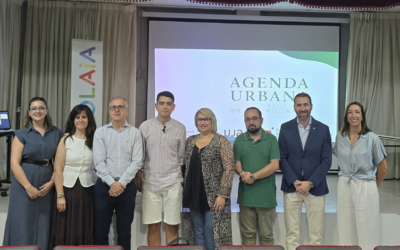
In keeping with this broader goal, the University of Jaén also organised a special public event as part of the course. On 20 May, a bilingual round table discussion titled Women’s Gaze: Experiences (in) Migration was held at the Antigua Escuela de Magisterio. The event offered personal and academic reflections on migration, particularly from the perspective of women and in the context of education. It was open to the public and streamed live to NEOLAiA communities across Europe — helping to raise awareness and encourage dialogue on this important topic.
**
Funded by the European Union. Views and opinions expressed are however those of the author(s) only and do not necessarily reflect those of the European Union or the European Education and Culture Executive Agency (EACEA). Neither the European Union nor EACEA can be held responsible for them.