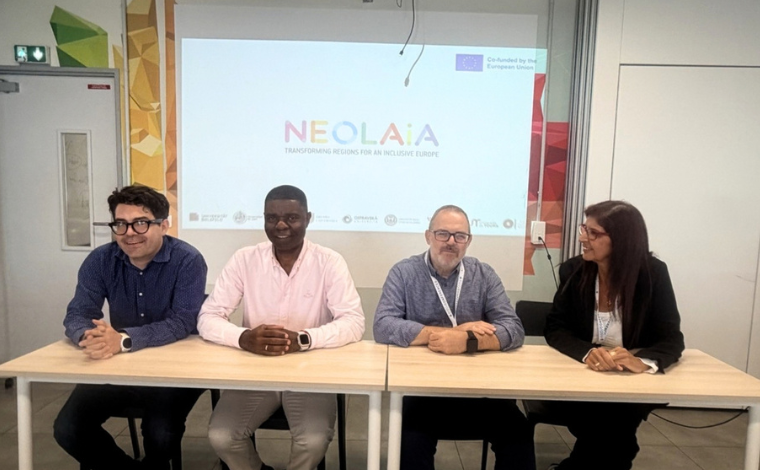
On 27–28 August 2026, NEOLAiA joined EMCIS 2026 in Paris for a panel discussion on the future of European higher education. Titled “Co-Creating the Future in Academia: The NEOLAiA Alliance”, the session explored how European university alliances can create new opportunities for learning, mobility, research and innovation while responding to shared challenges across Europe.
The conversation spoke directly to the future of European higher education-and to the responsibility we share in shaping it. The panel focused on the co-creation and the future in academia through the work and vision of the NEOLAIA Alliance, a network of 9 universities across Europe, including the University of Nicosia. As it was stated during the discussion, NEOLAIA represents more than collaboration. It embodies a new model of academic partnership-one built on shared values, shared challenges, and shared purpose. Across its member universities, NEOLAIA is redefining what it means to be a European institution in an era of rapid digital transformation, societal complexity, and global interconnectedness.
The panel discussion explored the role of international university alliances in shaping the future of higher education, with NEOLAIA serving as a leading example of collaborative European engagement. Participants emphasized that successful alliances are built on a shared vision, meaningful mobility opportunities, collaborative innovation, community co-creation, and sustainable governance structures. The discussion highlighted how alliances enable universities to address complex cross-border challenges that no institution could solve alone, including the development of European learning ecosystems, enhanced research capacity, and solutions to societal issues such as climate change, public health, democratic resilience, and responsible artificial intelligence. Several examples demonstrated the tangible benefits of alliance activities, including civic engagement initiatives, entrepreneurship training, digital innovation projects, internships, staff shadowing opportunities, joined curricula and collaborative learning experiences that provide students with practical international exposure. The panel also stressed the importance of balancing institutional autonomy with a common strategic mission, while maintaining academic independence when collaborating with industry, public authorities, and civil society organizations. In addition, participants discussed mechanisms for expanding access through virtual mobility, shared online courses, digital teamwork, and simplified recognition of credits and qualifications across institutions.
During the discussion, audience members were invited to reflect on the challenges that should be considered when planning the next phase of such alliances and preparing future proposals. Key concerns included ensuring long-term funding sustainability beyond project cycles, reducing administrative and regulatory barriers, achieving equitable participation among partners with different capacities, maintaining student and staff engagement over time, harmonizing academic procedures and credit recognition systems, measuring societal impact effectively, and balancing innovation with institutional priorities. The discussion concluded that the continued success of alliances such as NEOLAIA will depend not only on expanding opportunities, research collaboration, and societal impact, but also on addressing these structural challenges through stronger governance models, sustainable funding mechanisms, enhanced digital infrastructures, and deeper stakeholder engagement to ensure lasting transformation in European higher education.