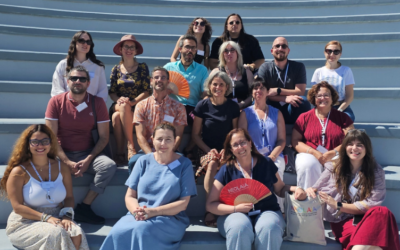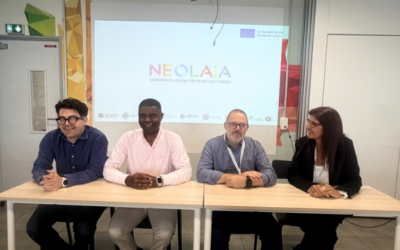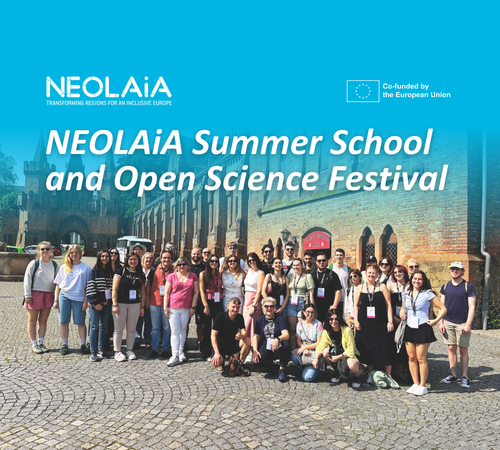
On Thursday, 12 June 2025, the NEOLAiA project concluded two parallel events hosted in Ostrava. The final day, the Open Science Festival, brought together academics from our nine partner universities and students from across the consortium. While the academics had come to Ostrava for the Erasmus+ Blended Intensive Programme, learning about and discussing new teaching methods as well as sharing their teaching experiences, the student event reached its conclusion after their two-week NEOLAiA Summer School, which focused on Digital Humanities and Social Sciences. During the Summer School, 40 students from all NEOLAiA universities worked together on a set of shared objectives. These included mapping key elements of the development of the Ostrava Vítkovice industrial area, understanding the functioning of an industrial city, and creating an interactive map using QGIS and Mergin Maps. The final product integrated data from seven different fields of study. Working in seven teams, the students investigated industrial processes, iron and steel production, infrastructure, architecture, street art, the historical transformation of the city, and the vanished communities of Vítkovice.
The Faculty of Arts of the University of Ostrava, together with researchers from the UO Faculty of Science and also partner NEOLAiA universities prepared a programme combining data collection and processing in the field with analytical and cartographic work in laboratories. The students also had ample opportunities to explore the city and the region, which lies at the intersection of three Central European countries and reveals many historical twists and turns of the area.
The project culminated in the teams presenting their findings to Ostrava academics and international attendees at the Open Science Festival. Following the student section, which generated considerable interest, the festival continued with a series of lectures and discussions. These spanned topics such as cultural heritage, environmental justice and the sociology of social change as well as the insights that language studies can offer into the landscape of online communication. The lectures also reflected on the role of AI and other digital tools in teaching, learning, and research.
**
Funded by the European Union. Views and opinions expressed are however those of the author(s) only and do not necessarily reflect those of the European Union or the European Education and Culture Executive Agency (EACEA). Neither the European Union nor EACEA can be held responsible for them.