Šiauliai State University of Applied Sciences lecturer Tatiana Buelvas reflects on a week of teaching, learning, and intercultural exchange during the NEOLAiA Focus Academy at University of Ostrava.
How do visual images shape our understanding of gender? What role do digital technologies and artificial intelligence play in creating, reinforcing, or challenging social norms? Students and academics explored these questions during the NEOLAiA Focus Academy Visual Competence and Gender in the Digital World, held at University of Ostrava from 7–12 June 2026.
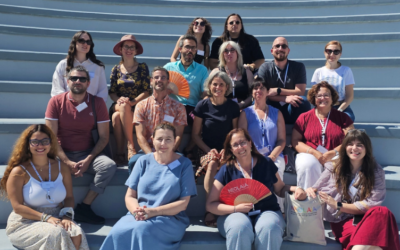
The intensive programme brought together participants from across the NEOLAiA European University Alliance, including colleagues and students from Šiauliai State University of Applied Sciences, Ștefan cel Mare University of Suceava, the University of Nicosia, and University of Ostrava. Throughout the week, participants examined visual culture from historical and contemporary perspectives while discussing the growing influence of digital media and AI-generated content on society.
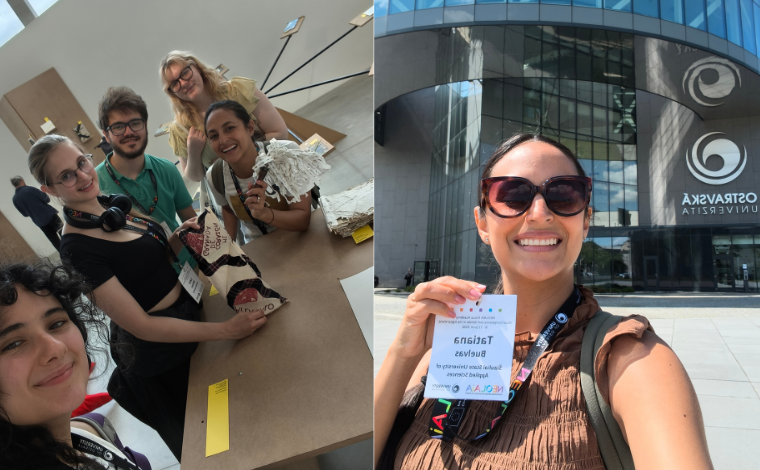
Among the lecturers was Tatiana Buelvas from Šiauliai State University of Applied Sciences, who also helped organise the programme. During the Focus Academy, she led a workshop titled Curated, Branded, Exhausted: Gender, Self-Performance, and the Psychological Price of Living Up to the Visual Ideal. The session explored how influencer culture, algorithms, and professional appearance expectations shape self-image and contribute to unrealistic standards of success and identity.
For Tatiana, one of the most rewarding aspects of the week was watching students connect ideas across disciplines and challenge each other’s perspectives.
“What impressed me the most was witnessing how students from different disciplines – visual arts, humanities, social sciences – engaged critically with the materials, the concepts and with each other.”
Students approached the topic from a wide range of academic backgrounds. As discussions developed, participants linked theoretical concepts to everyday experiences, uncovering new ways of understanding visual representation, social media, and gender.
“These moments of intellectual collision, where theory met lived experience, reminded me why intercultural teaching matters.”
The international character of the Focus Academy played a key role in shaping the learning experience. Students from different countries worked together, exchanged perspectives, and reflected on how culture influences the way people interpret visual content and social expectations.
Drawing on her background in intercultural communication, Tatiana viewed the programme as a powerful example of learning through diversity.
“Students exchanged not only ideas, but also their vision of the world. The diversity of the cohort became the pedagogy.”
Outside the classroom, participants continued conversations over meals, during cultural activities, and throughout the week. These informal exchanges helped students build confidence, develop intercultural awareness, and create connections that extended beyond academic discussions.
Many participants experienced international mobility for the first time. As the week progressed, they became increasingly comfortable sharing opinions, asking questions, and engaging with unfamiliar perspectives.
The programme concluded with a reflective activity designed by Tatiana. Participants wrote messages to one another, sharing insights, appreciation, and memorable moments from the week.
“After five days together, people had genuinely connected.”
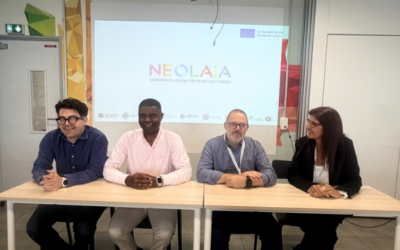
Alongside the educational activities, staff members discussed future opportunities for collaboration, including new Blended Intensive Programmes, teaching mobilities, and joint initiatives across the alliance.
Reflecting on the experience, Tatiana highlighted one of the greatest strengths of international mobility:
“This is what international mobility offers beyond the syllabus and the agenda — a chance to think differently because you are thinking alongside people from different worlds, languages, ages, and mindsets.”
The Focus Academy showed how NEOLAiA creates learning environments where students and staff tackle complex social issues while building meaningful international connections. By combining academic expertise, intercultural dialogue, and collaborative learning, the programme encouraged participants to broaden their perspectives and strengthen their engagement with an increasingly interconnected world.