During two intensive and rewarding days on November 4-5, Örebro University had the pleasure of welcoming Hélène Legrand, task leader within WP5 from the University of Tours. The purpose of the visit was to deepen the work around the Living Lab Hub, a joint project incubator to identify potential collaborations and serves as a point of contact for project leaders seeking support from the alliance as a whole.
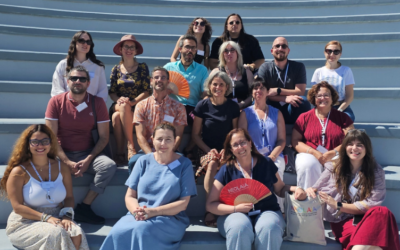
The program included presentations, exchanges of experience, and discussions on how Living Labs can strengthen regional development and contribute to sustainable solutions. The visit concluded with a workshop where participants from several partners – both local and international – gathered to concretize ideas and identify the next steps in the collaboration.
This initiative is part of the joint work within the NEOLAiA network and strengthens the ties between both universities and stakeholders in Europe. The visit provided many valuable insights and marked a significant step forward in advancing the Living Lab Hub and its goal to promote collaborations across national, regional, and local borders, as well as to reach out to society with the important research conducted at Örebro University and with the partners within the alliance.
The work continues, and the next step will be to strengthen the network of researchers with ideas and ongoing projects, as well as to implement opportunities for regular conversations in addition to the workshops already planned; the next meeting is in March 2026, followed by further meetings in June and during the autumn.
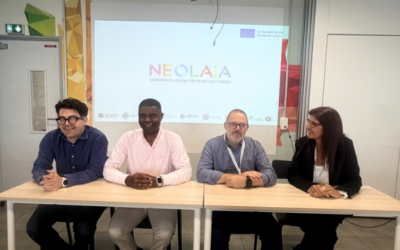
Participants from Örebro University were Maria Arnborg (Project Manager NEOLAiA), Magnus Kristoffersson (WP5 Leader), Ignacio Rangel (co-WP5 Leader), Anna Duberg (affiliated researcher and task force WP5) and Åsa Allard (Manager Örebro Holding).
**
Funded by the European Union. Views and opinions expressed are however those of the author(s) only and do not necessarily reflect those of the European Union or the European Education and Culture Executive Agency (EACEA). Neither the European Union nor EACEA can be held responsible for them.